How AI Integration in Schools Shapes Entrepreneurial Skills in Young Learners?
How AI Integration in Schools Shapes Entrepreneurial Skills in Young Learners?
Imagine a 12-year-old creating an app to help their community, testing it with AI, and showing a working prototype, all in one school term.
This is happening now in forward-thinking schools across India.
Infact, 53% of education institutes are using generative AI to develop learning materials, while 39% have introduced adaptive learning platforms, and 38% are leveraging AI for automated grading.
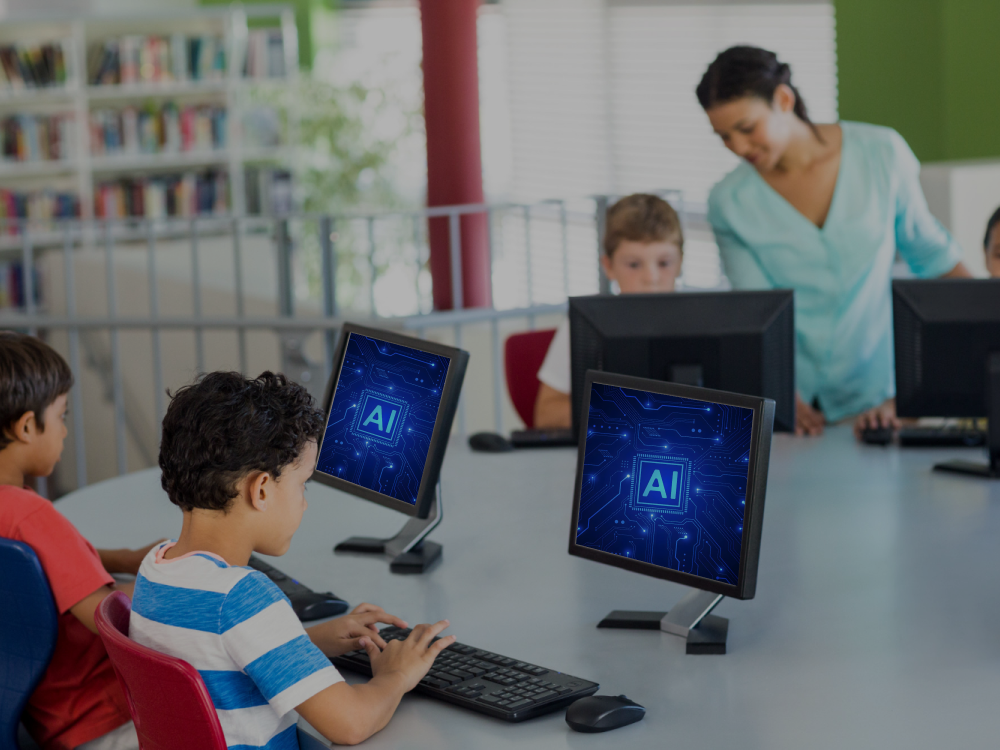
With AI integration in schools shapes entrepreneurial skills are shaped by giving students daily practice with creativity, problem-solving, experimentation, and pitching ideas using smart tools.
The exciting news is that top educational institutions, including many of the best schools in Hyderabad, are creating AI-powered learning environments. These environme
Understanding AI Integration in Modern Schools
When we talk about AI in schools, we’re not describing robots replacing teachers.
It typically means using intelligent tools and technologies that help children learn faster, think more creatively, and develop real-world skills essential for tomorrow’s careers.
AI in education includes tools that support:
- Personalised learning,
- Smart, data-driven teaching
- Skill-based development
- Enhanced creativity and exploration.
For parents, AI in education simply means that children use smart technologies to learn faster, think more deeply, and practice real-world skills they need in a digital, entrepreneurial economy.
According to Forbes, 90 % of college students use AI tools for academic work — a clear sign of AI’s mainstream role in higher education learning.
What Are Entrepreneurial Skills in Young Learners?
Entrepreneurial skills aren’t about turning every child into a business owner. They represent capabilities that help children identify problems, think creatively, take initiative, and work collaboratively.
Skill | What It Looks Like | Why It Matters |
Creative Problem-Solving | Finding novel solutions to challenges | Navigates uncertainty with confidence. |
Critical Thinking | Analysing information systematically. | Makes informed, rational decisions. |
Leadership & Collaboration | Guiding teams toward shared goals. | Builds strong professional relationships. |
Adaptability and Resilience | Bouncing back from setbacks | Thrives amid change and challenge |
Innovation Mindset | Constantly seeking improvement | Drives progress and value creation |
Communication Skills | Articulating ideas persuasively | Influences outcomes effectively |
How AI Integration Builds Entrepreneurial Skills at Every Stage
AI tools provide students with a safe, data-filled space to experiment, make mistakes, and quickly get better. In practice, this looks like:
- AI-powered learning platforms modify the difficulty level and type of questions, promoting independent thinking over simple memorisation.
- Coding and robotics with AI sensors, where children design, build and debug robots, practising design thinking, persistence, and teamwork.
- Chatbots and virtual assistants that answer “what if” questions and help students explore topics more deeply.
- Generative AI that supports brainstorming, visual design, or simple simulations, making it easier to prototype ideas.
- 86 % of students say they’ve used AI tools as part of their learning process, indicating widespread adoption across subjects and tasks.
The AI-driven entrepreneurial learning cycle
In AI-rich classrooms, learners naturally move through a cycle that mirrors how entrepreneurs work:
- Discover problems – Students analyse data, community issues, or global challenges with AI tools and curated content.
- Explore Solutions – They help with brainstorming options, comparing scenarios and running simple simulations with AI support.
- Experiment and prototype – Using robotic kits, coding platforms or creative AI tools, they build models, apps, or campaigns.
- Get Feedback – AI provides instant performance insights while peers and teachers give qualitative feedback.
- Apply in the real world – Students pitch ideas, showcase projects, or address school/community needs, learning to present and refine solutions.
AI-enabled Vs Traditional Learning
Aspect | Traditional Learning | AI-integrated entrepreneurial learning |
Teaching style | Mostly teacher-centered | Student-led with AI and teacher as co-guides. |
Learning Approach | Fixed, textbook-driven | Project-based, explorative, innovation-focused. |
Skills Developed | Recall, discipline | Creativity, adaptability, problem-solving. |
Assessment | Periodic exams and grades | Adaptive tests, portfolios, live projects |
Technology Use | Limited devices, basic ICT | AI tools, robotics, simulations, and design platforms. |
How can parents support Entrepreneurial Learning?
Parents can help children explore age-appropriate AI tools and apps at home, providing clear guidance on safety and ethics. Supporting their involvement in coding clubs, robotics contests, and innovation fairs allows children to engage in problem-solving and teamwork.
Conclusion
AI-integrated classrooms help children think independently, innovative confidently, and solve problems creatively. By building entrepreneurial skills early, schools prepare young learners to thrive in future careers shaped by technology and automation.
At the Shri Ram Academy, we integrate technology thoughtfully throughout the learning journey.
As one of the top schools in Hyderabad, TSRA’s inquiry-based approach encourages children to ask questions, experiment with ideas, collaborate effectively, and apply learning to real-world challenges — all core entrepreneurial traits.
Frequently Asked Questions
- Does AI reduce children’s own thinking?
No, AI enhances reasoning by reducing repetitive tasks and enabling deeper exploration. - How does AI teach problem-solving?
AI teaches and enhances problem-solving by simulations, coding tasks, and design challenges that require testing and refining ideas. - Can AI support business or financial skills?
Some tools offer budgeting games, market analysis activities, and entrepreneurship challenges. - How can parents help at home?
Use supervised AI learning apps, coding platforms, and encourage curiosity-based discussions.
