How AI Helps Teachers Identify Student Learning Gaps in International Schools?
How AI Helps Teachers Identify Student Learning Gaps in International Schools?
AI is transforming various aspects of our daily lives and education.
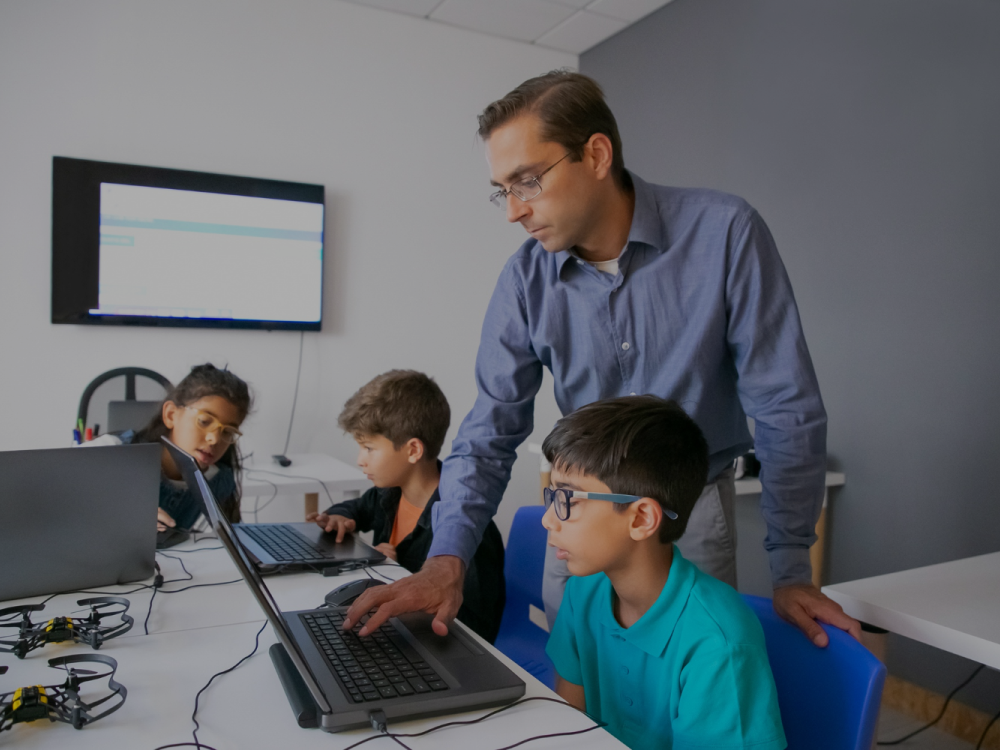
Picture a teacher reviewing 30 student assignments late at night, trying to identify subtle patterns in mistakes whilst planning tomorrow’s differentiated lessons.
If the same teacher receives instant, detailed analysis showing exactly where each student struggles, which concepts need reinforcement, and what interventions might work best, all within minutes of students completing their work.
In fact, personalised AI learning improves students’ outcomes by upto 30% compared to traditional approaches.
International schools aim to deliver personalised, globally competitive learning experiences. Yet, one challenge remains universal: identifying learning gaps accurately and early enough to intervene.
Artificial Intelligence (AI) empowers teachers in International Schools to identify learning gaps faster, more precisely, and more effectively.
Understanding Learning Gaps in International Classrooms
Learning gaps refer to the difference between what a student should understand at their grade level and what they actually demonstrate.
In International, multilingual classrooms, these gaps can be academic, conceptual, application-based, language-related, or linked to motivation and engagement.
Identifying these gaps early prevents long-term issues. It supports personalised instruction and boosts learner confidence, especially in challenging IB and international programs.
40 % of learners worldwide lack access to schooling in a language they speak or understand, rising to 90 % in some low- and middle-income countries — creating major language-related achievement gaps in classrooms.
Common Types of Learning Gaps
- Skills Gaps – These include Foundational literacy, numeracy, and core subject skills.
- Conceptual Gaps – These include Misunderstanding or incomplete learning of key ideas.
- Application Gaps – These include Difficulty applying concepts to real-world applications.
- Language Proficiency Gaps – These are common in multilingual international classrooms.
- Behavioural or Engagement Gaps – These include Low motivation, reduced participation.
How Teachers Have Traditionally Identified Learning Gaps
Teachers typically identify learning gaps through assessment results, homework and class performance analysis, and careful observations and discussions.
While experienced teachers can see patterns, this process is time-consuming, subjective, and harder to scale in large or diverse classes.
In multilingual international schools, it is particularly challenging to separate language issues from conceptual misunderstandings without deeper analysis.
How AI Helps Teachers Identify Learning Gaps in International Schools
AI Capabilities | How It Works | Impact on Teaching |
Real-Time Analysis | Analyses quizzes, classwork, and assignments instantly. | Immediate intervention opportunities. |
Pattern Recognition | Identifies mistake patterns and how to progress areas. | Targeted concept reinforcement. |
Predictive Analytics | Forecast students who may fall behind. | Proactive support before the struggle worsens. |
Detailed Reporting | Generates skill-wise breakdowns and mastery scores. | Data-informed teaching decisions. |
Language Analysis | Tracks vocabulary gaps and grammar challenges | Enhanced ESL learner support. |
Engagement Tracking | Observes participation and completion behaviours | Identifies motivational gaps. |
- Personalised Learning Insights and Predictive Support
Modern AI tools map each student’s learning journey, showing strengths, weaknesses, pacing and preferred learning styles. This helps teachers tailor tasks, groupings and projects, advanced learners can be stretched, while those needing more support receive targeted practice and scaffolding. - Real-Time Performance Intelligence
AI tools for teachers examine student work right away, find common mistakes, point out areas where progress is slow, and show which concepts need more practice.
- AI-Powered Language and Communication Analysis
It provides personalised, data-driven support to multilingual learners in international schools by identifying specific vocabulary and grammar issues and tracking comprehension levels.
Challenges and Ethical Considerations
Despite the benefits, international schools must manage several risks.
- Overreliance on AI: Teachers must remain the primary decision-makers, utilising AI as a supporting tool.
- Data Privacy & Security: Schools must protect sensitive student information from misuse.
- Algorithmic bias: AI systems should be trained on diverse, multicultural datasets.
- Teacher Training: Educators require proper training to interpret AI insights effectively.
AI as a Partner in Personalised Learning
AI does not replace teachers. It improves their expertise by providing clearer, faster, and more detailed insights into student learning. AI helps international schools provide highly personalised, fair, and future-ready learning experiences.
At The Shri Ram Academy, one of the best international schools in Hyderabad, we embrace technology thoughtfully as a tool enhancing, never replacing, our educators’ expertise.
Our approach combines AI with human insight. It gives teachers immediate access to real-time data about each student’s strengths and needs. This helps them offer quick, personalised support that truly makes a difference.
83 % of teachers believe AI can help identify student learning gaps more efficiently, supporting targeted instruction rather than replacing educators.
Frequently Asked Questions
- Can AI detect learning gaps earlier than traditional assessments?
Yes, AI tools check quizzes, classwork, and engagement data in real time, helping teachers identify difficulty patterns within days instead of waiting for end-of-term exams. - How can international schools start using AI?
Schools can start by adopting adaptive learning platforms, AI-powered assessment tools, and analytics dashboards. - Does AI replace the teacher’s role?
No, AI won’t fully replace teachers’ roles, but it can definitely help them handle repetitive tasks.
- What are the limitations of AI?
Limitations include data privacy concerns, potential algorithm bias, incomplete data for new or irregular users, and the risk of over-reliance if teachers are not properly trained.
